Quick verdict
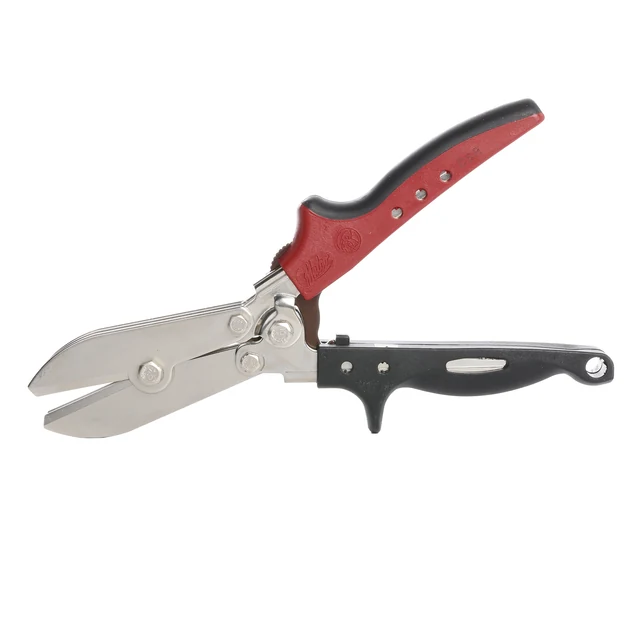
The Malco C5R is a five-blade sheet metal crimper for reducing suitable round-duct ends. Buy it for a recurring forming task that matches its material ratings and straight-jaw access; the finished joint still needs the fastening, sealing and inspection required by its installation.
The buying decision should start with the sheet metal and the access around the joint. A recognizable brand and a comfortable-looking handle cannot establish that a particular tool will work in every thickness, material or installed position. Choose the jaw format for the work you actually encounter.
Research basis
This article uses manufacturer product information and catalog material checked on October 29, 2026. We have not crimped duct with the C5R, measured hand force or tested a completed connection for leakage. The recommendations are editorial buying analysis.
What metal thickness can the C5R crimp?
The official C5R page lists the capacities below. Preserve the material column when comparing specifications; one gauge number is not a universal rating for every metal.
| Item | Documented specification |
|---|---|
| Blade layout | Five-blade crimper |
| Aluminum capacity | 0.035 in / 0.89 mm |
| Copper capacity | 0.023 in / 0.58 mm |
| Stainless capacity | 26 gauge; 0.018 in / 0.46 mm |
| Galvanized steel capacity | 24 gauge; 0.028 in / 0.71 mm |
| Mild steel capacity | 24 gauge; 0.024 in / 0.61 mm |
The Malco catalog describes a long, shallow double crimp and distinguishes the C5R from related offset and three-blade models. That geometry is the product's central purpose. It should not be confused with a tool for electrical terminals or refrigerant-tube fittings.
What the tool contributes
A formed male end gives compatible round sections a way to fit together. The practical attraction is control over that preparation when a factory end is unavailable or an end has been cut. The tool is one part of making the intended connection.
Malco uses strong language about the resulting fit in its product description. We do not interpret that as proof that every joint made with a C5R is airtight. The completed assembly still depends on the duct system, connection details, workmanship and specified fastening and sealing.
For buying purposes, ask what currently slows the task. If the problem is repeated end preparation, a dedicated crimper may address it. If the problem is poor joint access or an incompatible connection detail, another tool may not solve the underlying issue.
Think about the whole circumference
Before working on a final piece, plan how the formed end should engage the mating section and how you will inspect it. A joint that starts easily can still fit poorly farther around the circumference. Evaluate the completed fit against the applicable installation detail.
Overworking one area to solve a fit problem can create a different problem elsewhere. A practical approach is to establish the method on suitable offcuts before committing to a finished section. That is a preparation recommendation, not a measured claim about this tool's consistency.
Keep the job's acceptance criteria separate from how satisfying the crimp looks. A visually neat result may still need checks for engagement, alignment, support and sealing. Select a tool that helps produce the required assembly rather than treating the tool's action as the entire quality check.
C5R vs. C6R: straight or offset jaws?
The C5R's format deserves a real access check. Consider the space for the jaws, handles and your hand around the work. A compact-looking tool in a photograph can still be awkward when a wall, hanger or adjacent duct limits the approach.
The manufacturer catalog identifies an offset C6R as a separate tool. That distinction is useful when comparing access needs, but we have not performed an ergonomic comparison. Inspect the available jaw orientation before deciding that one shape covers all your installed work.
For repetitive work, a chance to handle the tool at a supplier may resolve more than another specification comparison. Check opening span, latch operation and how it feels with the gloves you normally use. We cannot infer fatigue reduction for your hand from marketing descriptions alone.
Material limits and equipment boundaries
Identify the material and thickness rather than guessing from the duct's apparent stiffness. The documented rating is a limit to check, not an invitation to force the handles when the work resists. If material identity is uncertain, resolve that before selecting the tool.
The product is also promoted for stove pipe. That should not be read as blanket approval to alter every vent or flue component. A listed vent system has its own approved joint construction and installation instructions. Use the exact system documentation to decide whether field forming is permitted.
Sheet-metal edges and pinch points remain part of the job. Plan support and hand placement so you can control the work without reaching into the closing jaws. A thumb latch is a storage convenience, not a substitute for attention during the forming operation.
Ownership and buying checklist
- Confirm C5R five-blade identity rather than an offset or three-blade substitute.
- Match each common material and thickness to the manufacturer's rating.
- Check that the straight-jaw approach fits the positions where you will work.
- Verify the seller, condition, returns and applicable warranty terms.
Current prices and replacement-component costs have not been verified. Ask the supplier about support for the mechanism and any available service parts. Inspect jaw alignment and operation when the tool arrives so an obvious shipping or condition problem is addressed before a job depends on it.
The C5R makes sense as a purposeful round-duct preparation tool. Buy it when its capacity and shape match a recurring task, then judge the finished connection by the installation requirements. Durability, comfort and leak performance remain untested in this article.
Manufacturer specification reference
Malco · C5R · C5R 5-Blade Sheet Metal Crimper
These are manufacturer specifications, not independently measured results.
- Blade layout
- Five-blade crimper
- Aluminum capacity
- 0.035 in / 0.89 mm
- Copper capacity
- 0.023 in / 0.58 mm
- Stainless capacity
- 26 gauge; 0.018 in / 0.46 mm
- Galvanized steel capacity
- 24 gauge; 0.028 in / 0.71 mm
- Mild steel capacity
- 24 gauge; 0.024 in / 0.61 mm
Related BAS Bridge learning
Sources & verification
Follow the current manufacturer instructions for your exact model. Specifications and source revisions can change.
- Malco C5R official product specifications ↗
Exact C5R identity, five-blade geometry, handle features and material-specific thickness capacities. Marketing language about leak-proof connections is not treated as a field test.
Checked Oct 29, 2026 · Source publication date: Unknown - Malco full-line catalog, May 2018 ↗
Historical manufacturer catalog corroborating C5R crimp geometry and distinguishing related C6R offset and SC3R three-blade tools. Used for tool-format context, not current pricing or performance.
Checked Oct 29, 2026 · Source publication date: Unknown - Malco C5R official product image ↗
Exact-model image linked from the manufacturer product page and visually checked for product identification. The image is not evidence of BAS Bridge ownership or testing.
Checked Oct 29, 2026 · Source publication date: Unknown
Editorial context
BAS Bridge editorial prepared this documentation-based research overview and buying analysis. No firsthand experience, physical measurement or independent performance test is claimed.
Manufacturer documentation checked on October 29, 2026. Buying recommendations are original editorial interpretation of that documentation, with no physical product testing.
No current price, stock level, customer star rating, or measured reliability rate is implied.
Methodology & disclosure →