Quick verdict
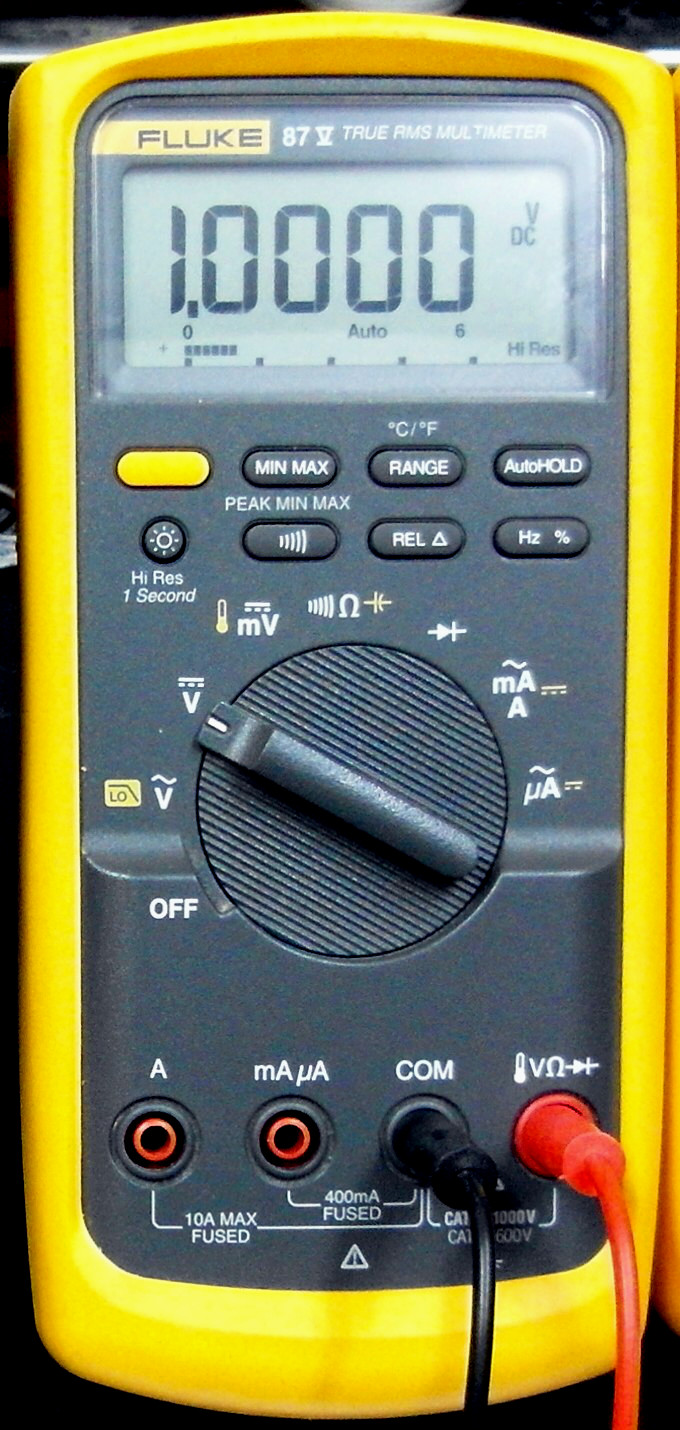
The 87V suits technicians whose work extends into industrial electrical diagnosis and drive-related measurements. A simpler HVAC clamp can be the better first purchase when motor-current access is the everyday requirement.
This is a research-based review of the exact model, using the linked official documentation and original buying analysis. We have not performed hands-on or comparative testing. Amazon customer reviews and star ratings are not reproduced or represented as independent evidence.
The reason to step up is the diagnostic task
The Fluke 87V is a candidate for technicians who regularly move beyond basic voltage and running-current checks into industrial equipment. Its value is the measurement approach it supports, including a low-pass filter intended for drive-related work. Buying it simply because it is a familiar premium model misses the more useful question: which problem does your present meter fail to answer?
A technician servicing mostly straightforward heating and cooling equipment may get more immediate benefit from an HVAC -oriented clamp. A technician responsible for larger mechanical plants may have a stronger reason to consider the 87V alongside a separate clamp. Think in terms of a complete diagnostic kit rather than a single most-expensive meter.
A VFD filter is relevant, not universal
Fluke documents a low-pass filter for working with variable-frequency drives. That feature matters because an inverter output is not the same signal as a simple utility sine wave. A measurement method appropriate for one location in the circuit may give a confusing result at another.
The practical decision remains equipment-specific. Identify whether the question concerns the drive input, output, motor, command signal or an intermittent event. Then use the drive's test guidance and appropriate instrument mode. A filtered voltage number is useful evidence for a defined question; it is not a complete description of the waveform or a substitute for an appropriate power-quality investigation.
Peak capture needs a defined event
The official page describes 250 µs peak capture. That is a manufacturer capability claim, not a test result from this review. It provides a reason to examine the instrument when short events matter, but it does not guarantee that every intermittent fault will be captured or explained.
Timing and setup are still central. A useful record says what was being monitored, which mode was used and what equipment event occurred. Without those details, a maximum or peak number can be easy to overinterpret. Do not confuse the presence of a capture function with a diagnosis of the event's cause.
The current-input tradeoff
The 87V measures current through lead inputs and can work with suitable accessories, but it has no built-in clamp jaw. For many HVAC motor checks, a dedicated clamp is the more convenient measurement path. Compare the required accessory, range, access and carrying arrangement before assuming one instrument will replace the other.
Two instruments may be worthwhile when a voltage observation needs to remain in place while current is checked elsewhere. Conversely, an integrated clamp can reduce the number of pieces in a compact service bag. This is a workflow choice, and it should be made before accessories turn an apparently simple purchase into a larger kit.
Model names can hide a meaningful difference
The 87V and 87V MAX are separate products. Protection and ruggedness claims attached to the MAX should not be transferred to the standard 87V. The same applies to bundled accessories and case contents. A family photograph or a combined product listing can make a comparison look more complete than the selected package really is.
Check the exact model against the official documentation and inspect what is included in the offered kit. If your employer requires traceable calibration data, confirm that service separately. A factory instrument package and a package supplied with a particular calibration certificate are different purchase arrangements.
A plant-maintenance example
Consider an air-handler drive complaint where the controller command and actual motor behavior disagree. A useful investigation separates the command, the drive's reported state and the electrical measurements. The 87V may contribute to one of those layers, but it cannot establish all of them through a single reading.
That example is the strongest case for this class of meter: deeper electrical work within a disciplined diagnostic method. Compare it with the 376 FC when clamp access and motor-current capture dominate, or the 902 FC when heating-service functions dominate. We have not tested filter behavior, peak capture, input accuracy or service life. Choose it for documented capabilities that fill a known need, not an unmeasured promise of superior results.
Reasons to consider it
- VFD-oriented low-pass filter
- Broad lead-based functions
- Peak-capture capability
Tradeoffs to consider
- No built-in current clamp
- 87V and 87V MAX are separate products
- Does not replace waveform analysis or drive-specific guidance
Manufacturer specification reference
Fluke · 87V · Fluke 87V Industrial Multimeter
These are manufacturer specifications, not independently measured results.
- Voltage
- 1000 V AC/DC
- Current
- 10 A AC/DC via input terminals
- Drive measurement
- Low-pass filter for VFD output measurements
- Peak capture
- 250 µs manufacturer claim
- Safety category
- CAT III 1000 V / CAT IV 600 V
Related BAS Bridge learning
Sources & verification
Follow the current manufacturer instructions for your exact model. Specifications and source revisions can change.
- Fluke 87V official specifications ↗
Official model documentation checked for the features and limits discussed in this original research review. Specifications are manufacturer claims; buying judgments are editorial analysis.
Checked Nov 2, 2026 · Source publication date: Unknown
Editorial context
Independently written BAS Bridge research review. Manufacturer features are distinguished from editorial judgments. No firsthand use or measured comparative performance is claimed. Amazon customer reviews and star ratings are not copied or synthesized into ratings.
The linked official product documentation was checked on November 2, 2026. This article combines documented features with original task-based analysis. No physical testing, service-call use, Amazon customer-review consensus or independent performance measurement is claimed.
No current price, stock level, customer star rating, or measured reliability rate is implied.
Methodology & disclosure →